
Labs
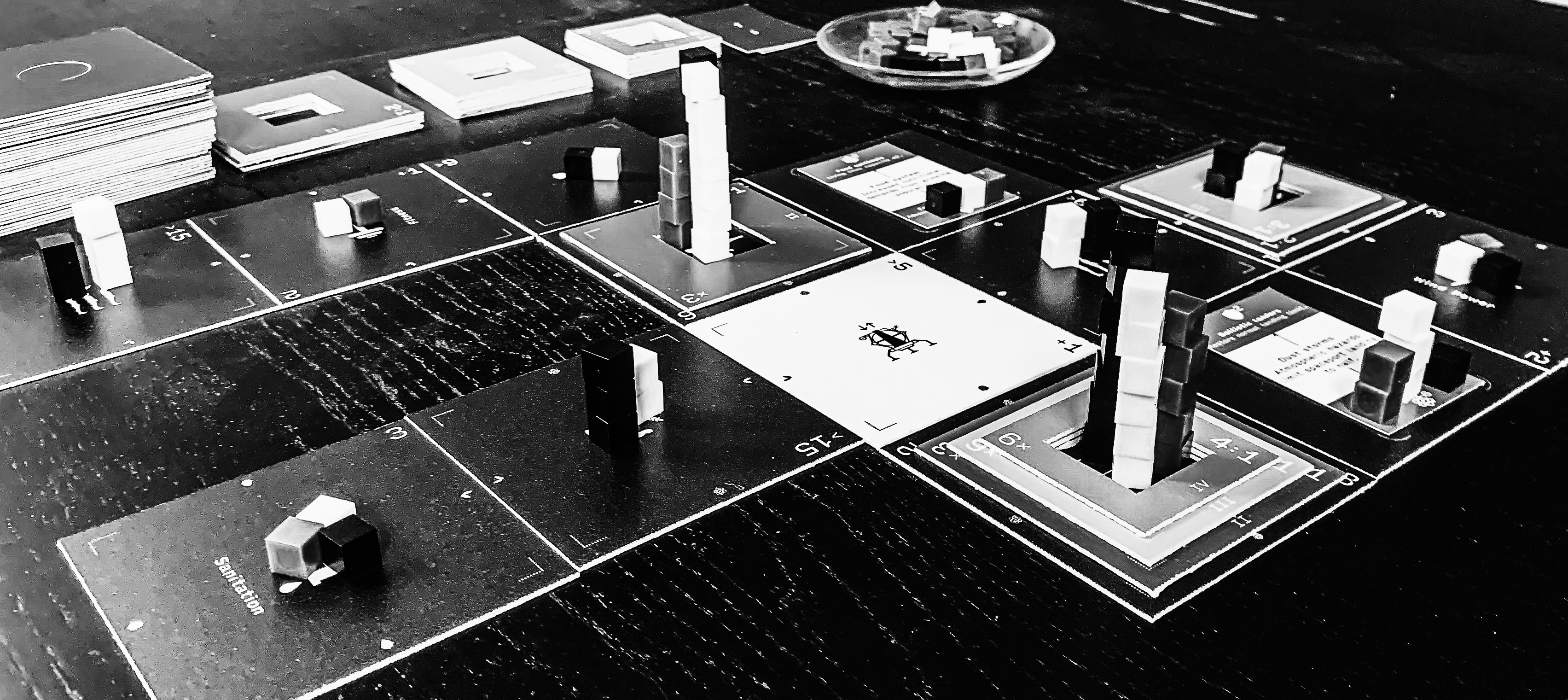
Shaping what’s next requires human judgement, rigor, and vision.
Organizations participate in a co-evolving future shaped by people, technology, and markets. But even as execution becomes less of a barrier, they often become stuck, not for lack of ideas or technical capability, but because they’re tackling uncertainty, complexity, and accelerating change with the same tools for optimizing what exists. Real breakthroughs emerge when people shift perspectives, challenge assumptions, and discover new possibilities through constructive tension and friction. By combining collaborative design thinking, systems thinking, and applied foresight, our innovation frameworks activate the conditions for serious play that help organizations rethink and reinvent together—creating the capability to continuously learn, adapt, and meaningfully shape what’s next.
Ready for serious play ›

|
Innovation must move with the landscape.
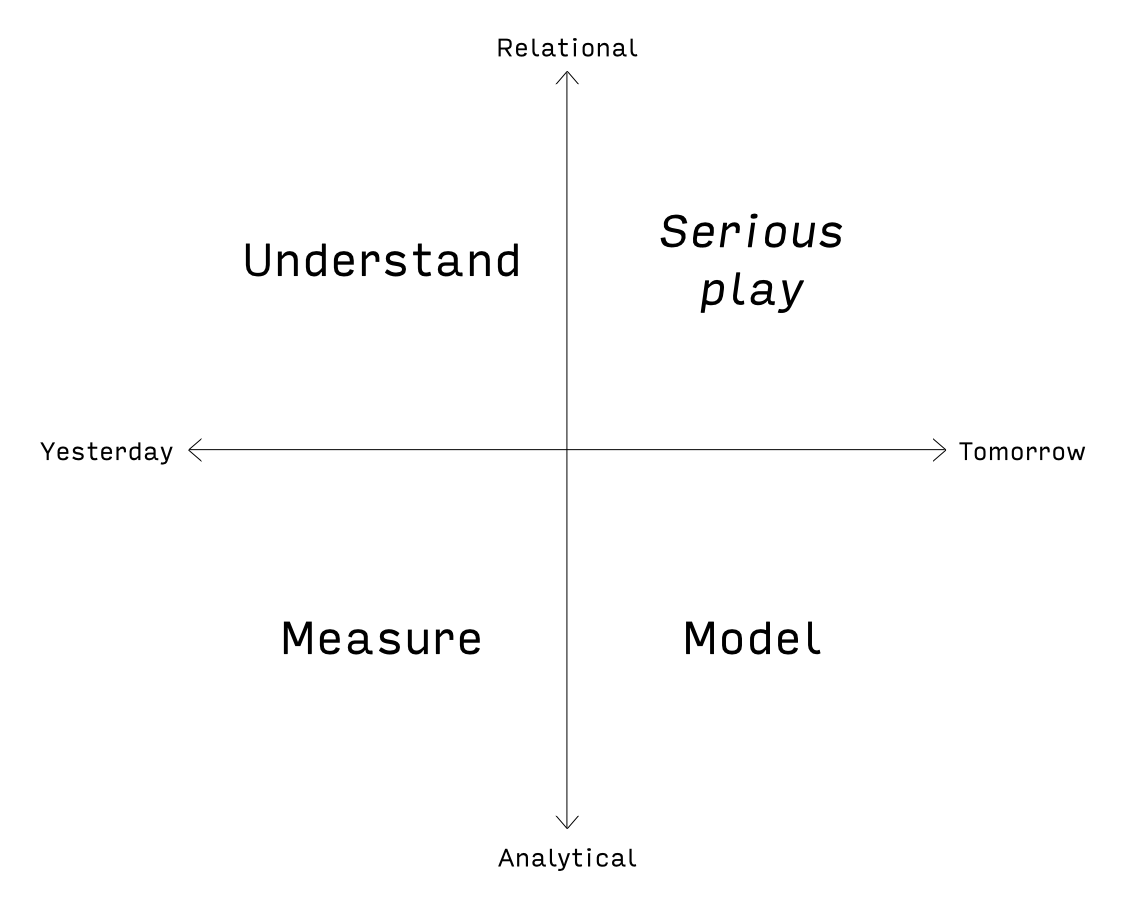
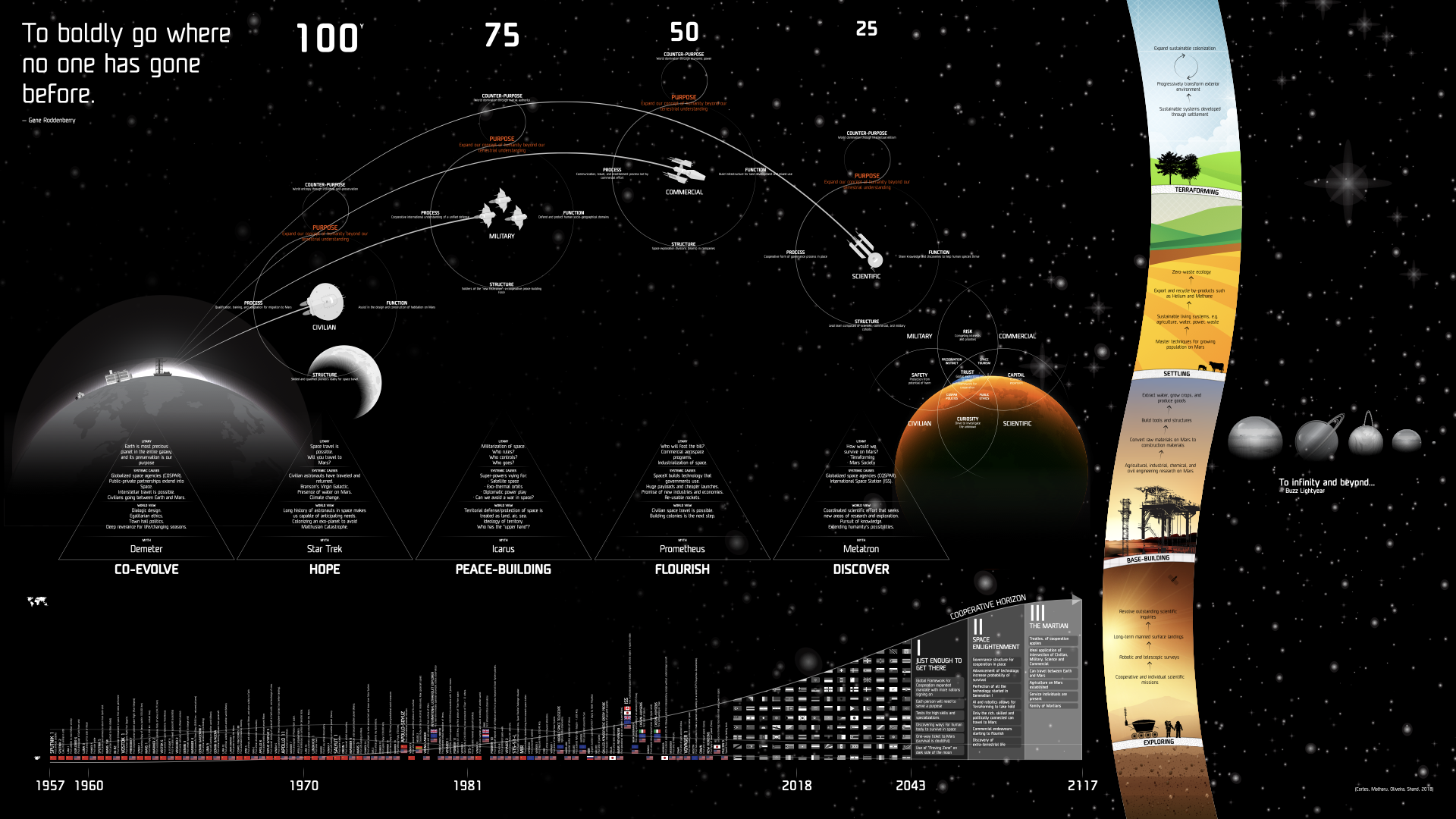
Most approaches to innovation are static, fixed to a snapshot of the future that has already begun to shift by the time it is reached. The result is a relentless cycle of chasing yesterday’s table-stakes instead of leading tomorrow’s possibilities. While analytical intelligence excels at optimizing and automating, relational human intelligence helps us navigate ambiguity, uncertainty, and opportunity. Yet organizations have become highly capable analytically while remaining comparatively underdeveloped relationally, creating an imbalance between optimizing what exists and making leaps to what’s next.
|
Serious play activates integrated modes of thinking.
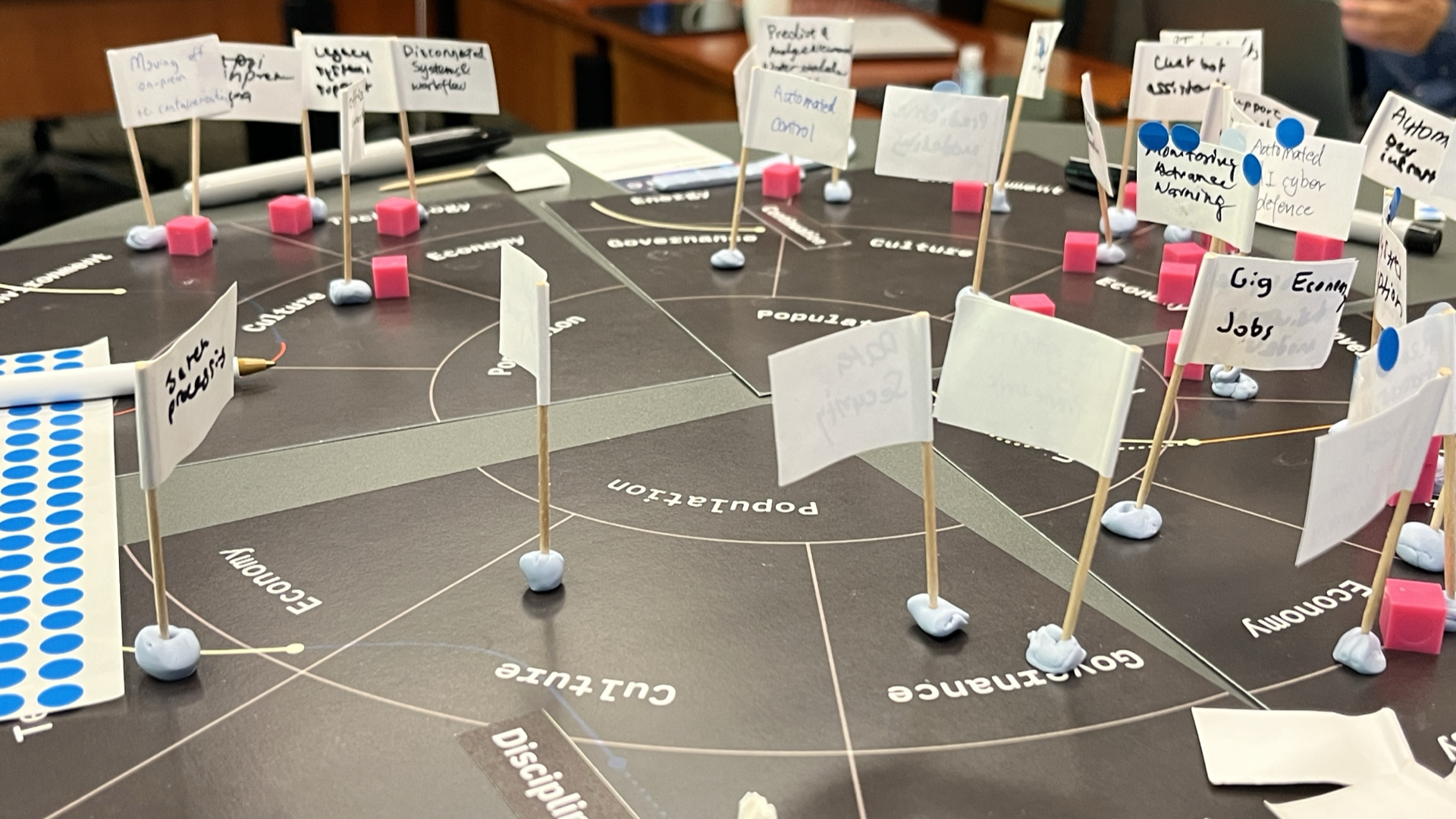
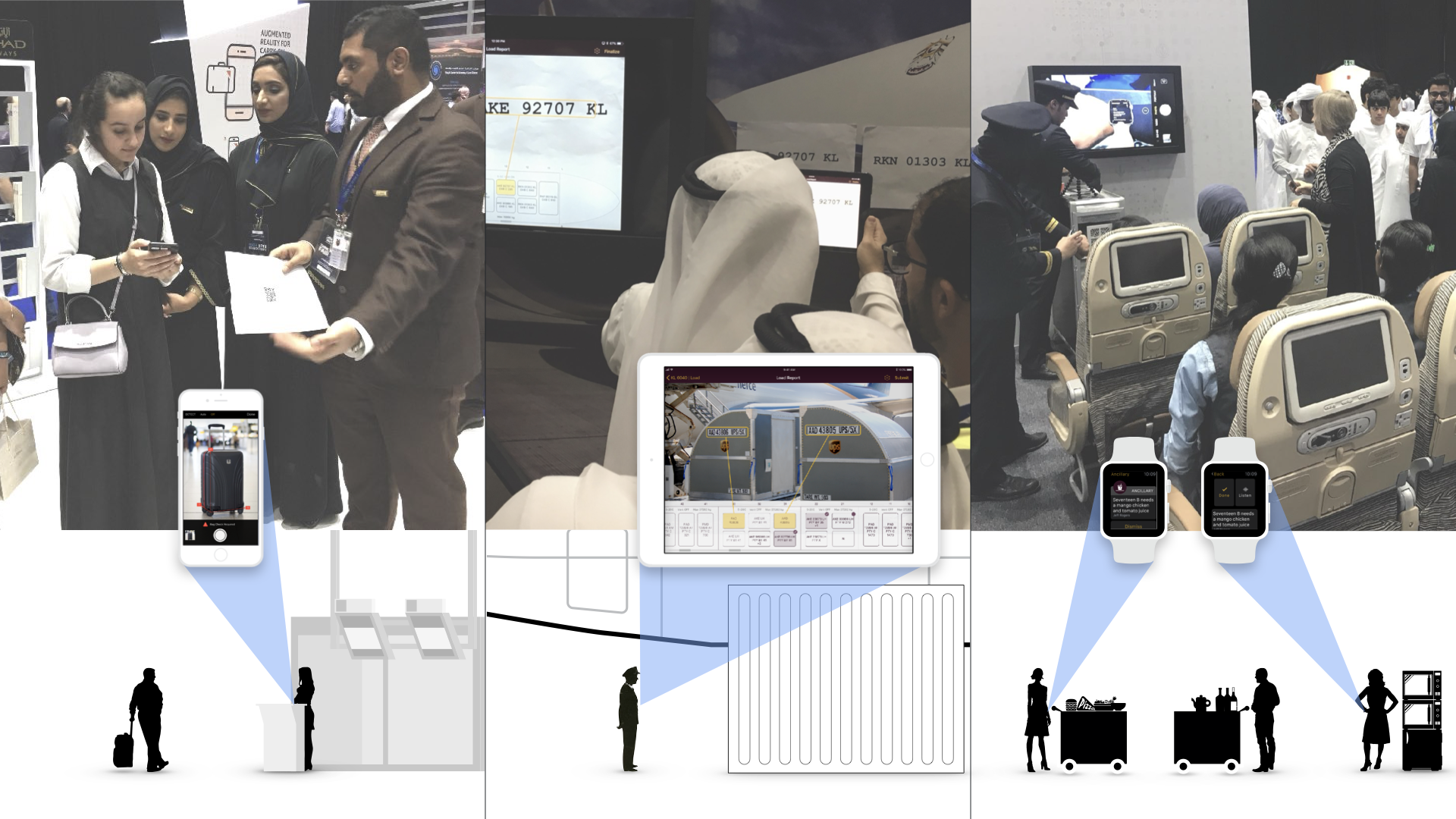
Play has always been one of the most powerful ways to explore, create, challenge, and learn. It transforms innovation from conjecture to experience, revealing possibilities that often remain hidden through conventional approaches. By creating the conditions for experimentation, constructive tension, and creative friction, our serious play frameworks combine design thinking, systems thinking, and applied foresight to build shared understanding, test decisions, and align ideas across different perspectives, forming cohesive trajectories for differentiated product and service evolution.
|
|
|
Pervasive innovation must be cultivated.
Transformative companies understand that pervasive innovation emerges not only from workshops, jams, and hackathons—it is cultivated through a complete system woven throughout the organization that continuously reinforces exploration, experimentation, learning, and adaptation. The system must be practical enough to apply every day, flexible enough to scale from a single individual to cross-functional business units, and measurable enough to demonstrate visible, meaningful impact that motivates adoption, repetition, and fluency through practice over time. More importantly, it must recognize the unique temperament of an organization, integrating with how people think, collaborate, and make decisions so innovation becomes a natural part of how they work together.
Human-centered innovation design system.
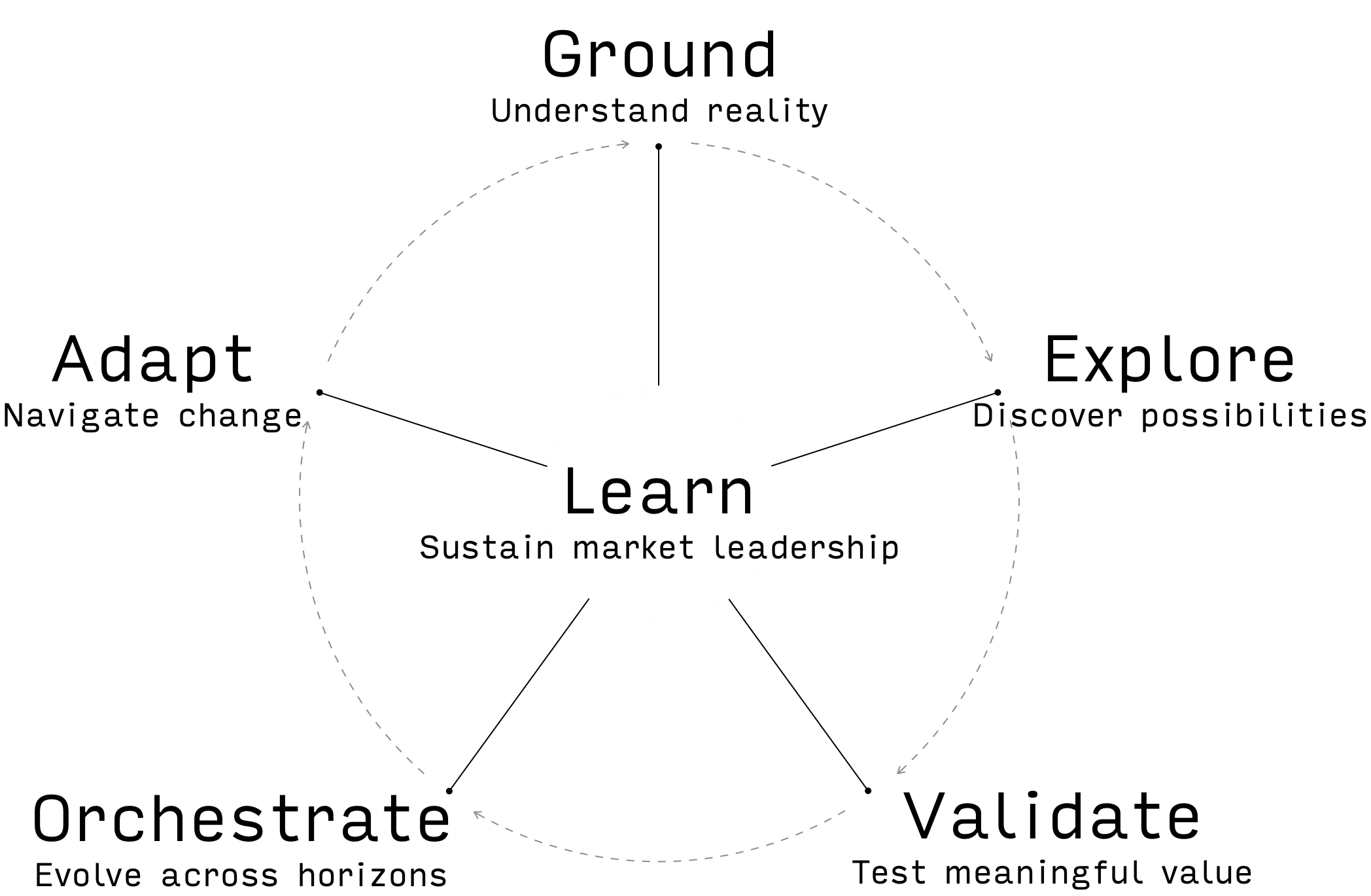 |
An integrated set of human-centered frameworks for designing innovation that help organizations continuously understand reality, discover possibilities, test meaningful value, evolve across horizons, and navigate change. Together, they enable a repeatable and scalable capability for learning, decision-making, and adaptation that sustains market leadership in a continuously shifting landscape.
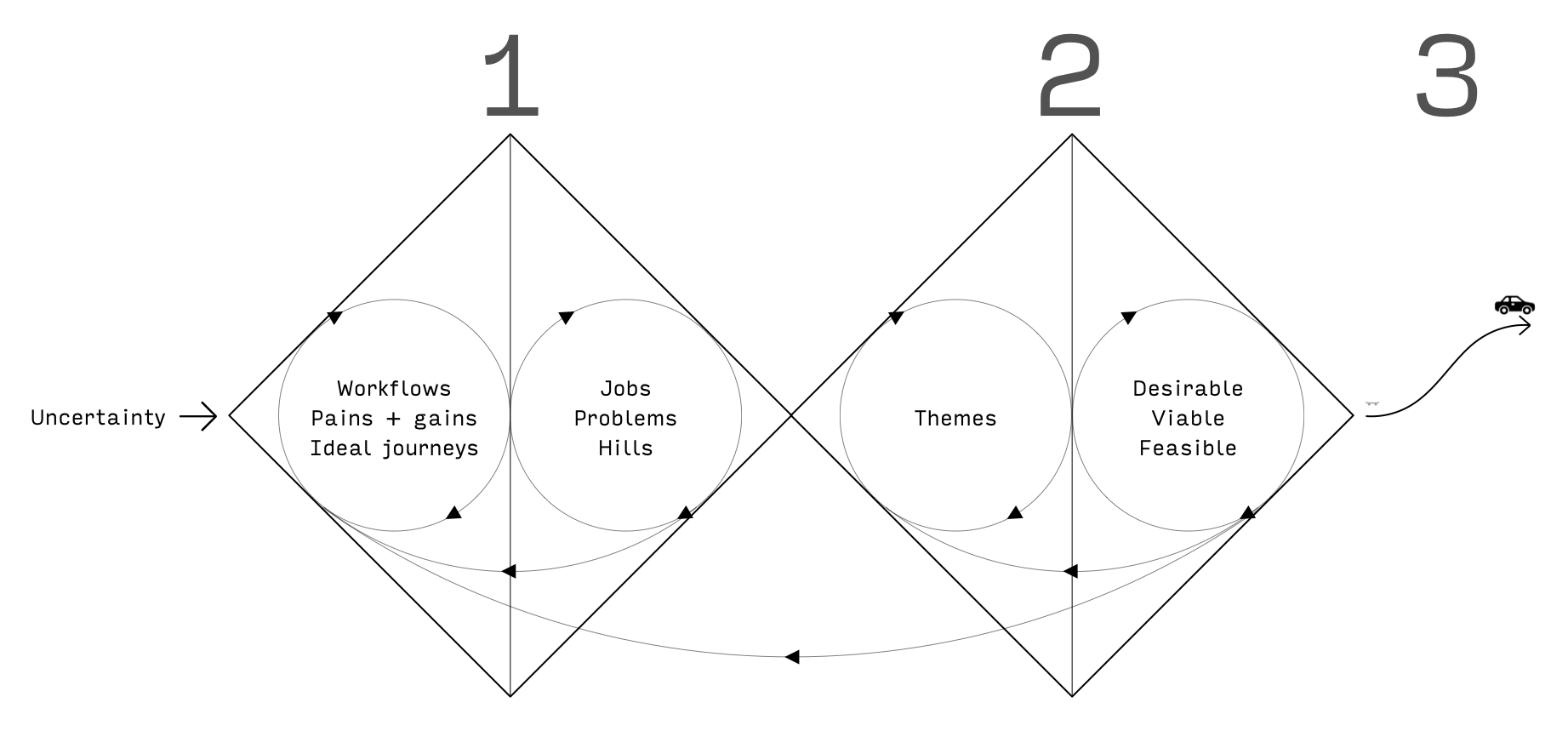
Innovation Design LabExperience Human-Centered Innovation Design through our immersive 3-day lab that activates collective discovery, problem-solving, and adaptive invention around your organization’s next horizon. More about the immersive lab › |
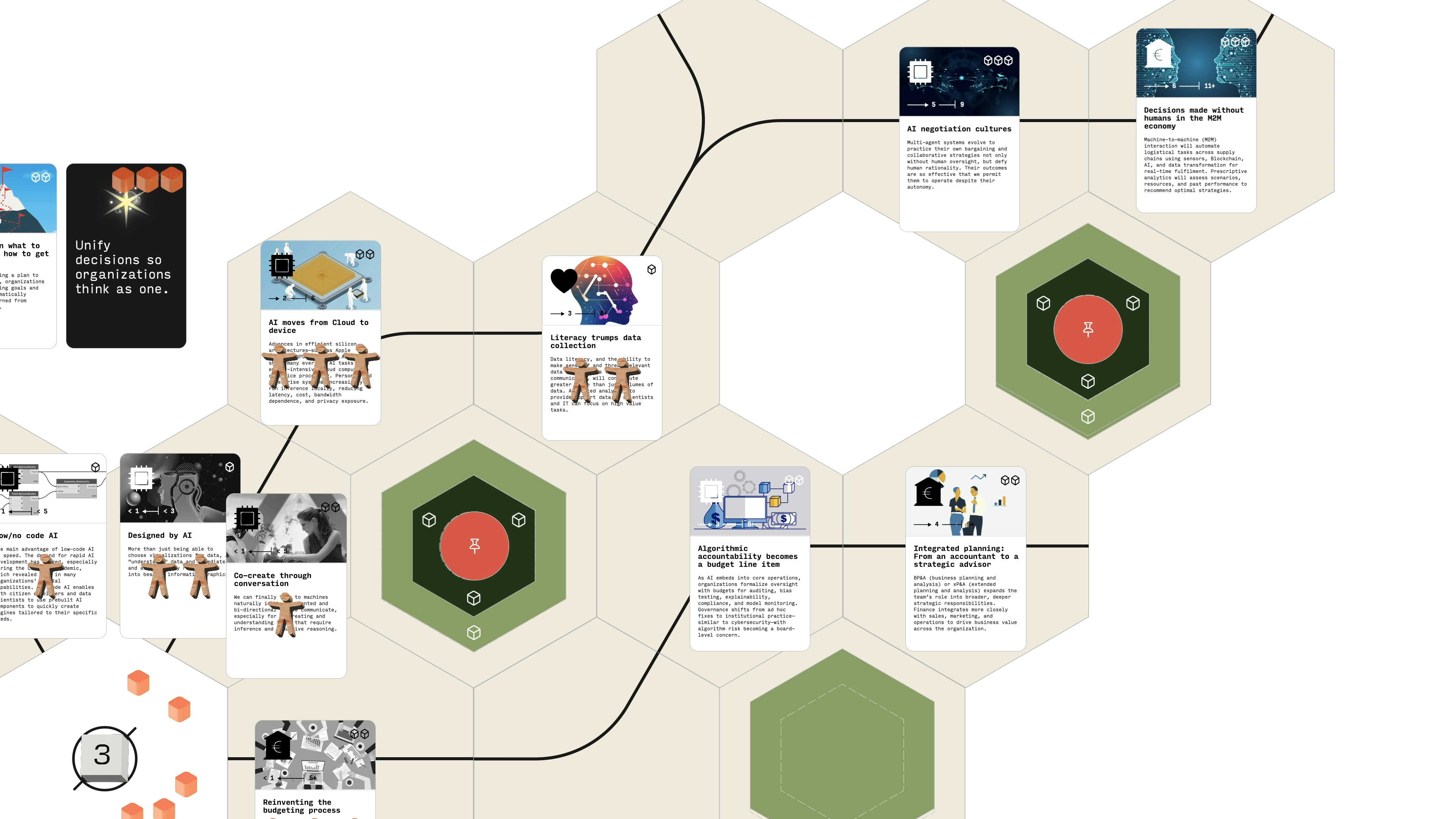
Action Futures FrameworkThe Action Futures Framework activates decision rehearsal for leadership teams through cooperative game mechanics that reveal organizational value, confidence, alignment, and impact, while navigating uncertain futures. More about decision rehearsal › |
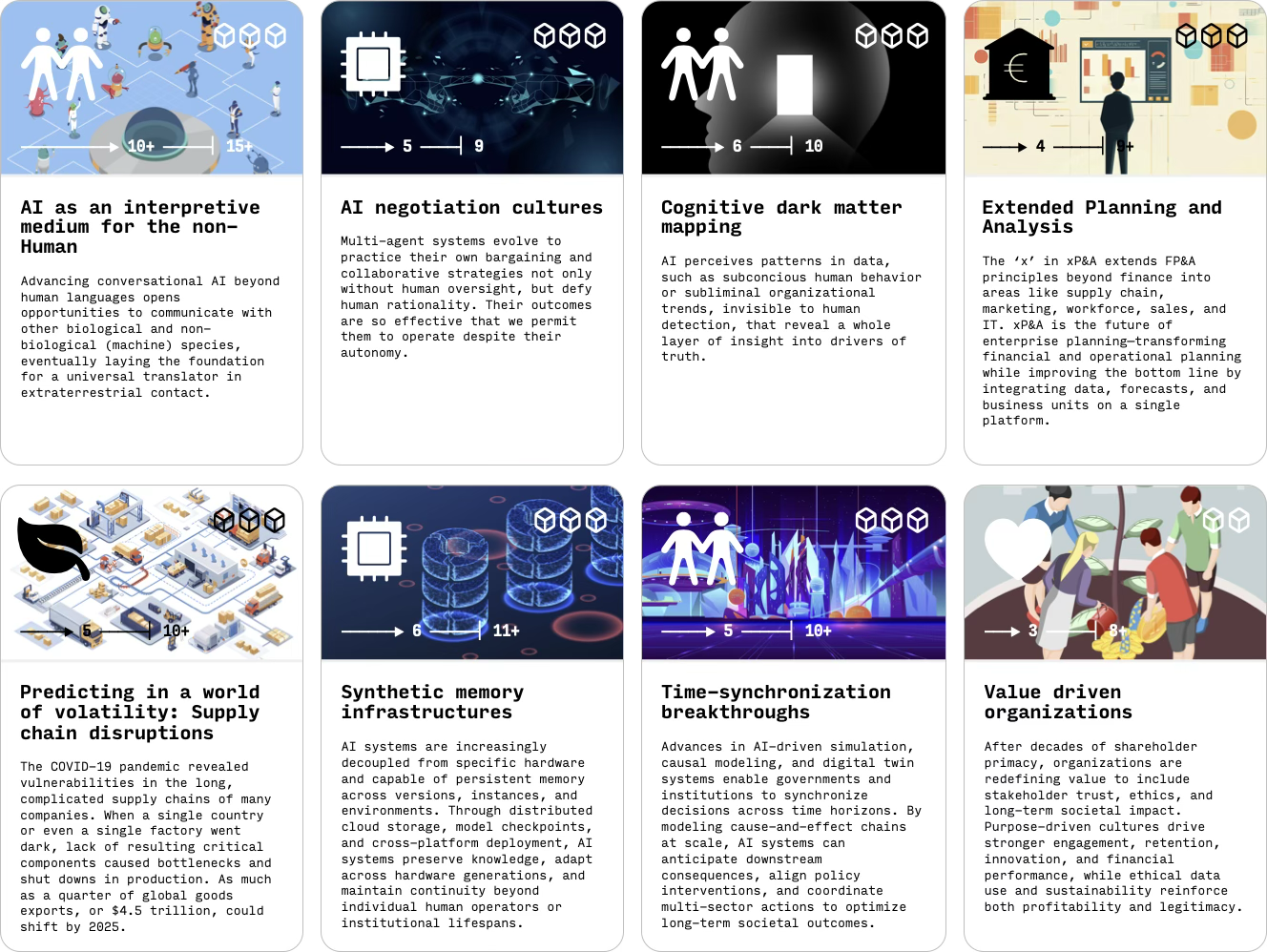
Signal CodexSign-in for free access to our continuously updated foresight repository with research on emerging signals. Explore the Signal Codex › |
Our principals have collectively engaged with:
 |
 |
 |
 |
 |
 |
 |
 |